

Lithium Laser Welder: Precise Selection & Complete Maintenance Manual
With the rapid growth of new energy, lithium batteries are widely used as advanced energy storage devices in electric vehicles, mobile devices and other fields. The lithium battery laser welder, thanks to its high
efficiency and precision, has become an indispensable part of lithium battery manufacturing.
Xinde Laser will take an in-depth look at the key knowledge of lithium battery laser welders from two angles: selection and maintenance.
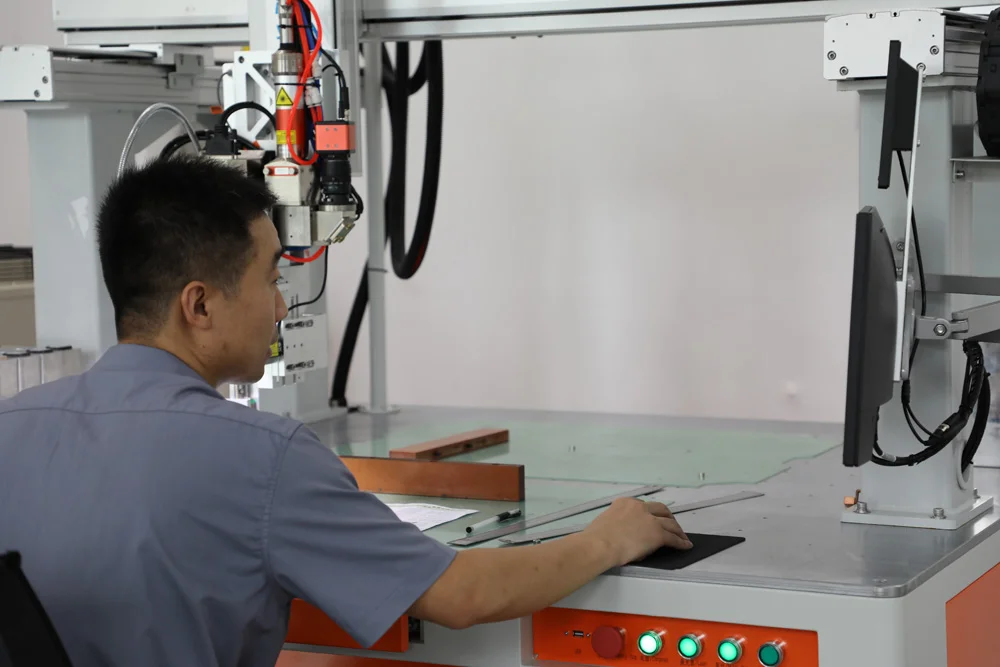
I. Selecting a lithium battery laser welder
1. Choose the manufacturer carefully
When selecting a lithium battery laser welder, the first consideration is a qualified manufacturer. Qualified manufacturers usually have a professional technical team and a complete after-sales service system, and can provide better guaranteed
product quality and after-sales support. Product stability and reliability are also major advantages of a qualified manufacturer.
2. Understand product performance
Choosing a laser welder requires a full understanding of its performance parameters, including maximum welding speed, maximum power, minimum spot diameter and laser wavelength. These parameters determine which welding materials
and production scenarios the equipment suits. Choosing the right performance parameters for your specific needs is therefore crucial.
3. Understand equipment features
The features of a lithium battery laser welder directly affect its application in the production process. For example, manufacturing lithium battery chips requires a high-precision three-axis motion control
system and advanced optical adjustment technology, while flexible board production calls for a flexible processing platform and a high-speed scan head. Choose the equipment features
that suit your production needs.
4. Choose the model according to your own needs
Different laser welder models are designed for different production needs. Consider factors such as production scale and site size, and choose the model that fits your own production requirements.
II. Maintenance of lithium battery laser welders
1. Equipment cleaning
Equipment cleaning is an important step in ensuring equipment life and performance. Clean the equipment regularly to avoid excessive reflection of the powerful laser beam, which can scratch the lens and welding head. This helps
maintain the working condition of the equipment.
2. Cleaning the optical system
The optical system is the core of a lithium battery laser welder and also the part most easily affected by dust, dirt and grease. Clean and maintain the optical components regularly to ensure the equipment
works normally.
3. Maintaining the cooling system
The laser generates a large amount of heat during operation and must be cooled by the cooling system. Therefore, regularly inspecting and maintaining the cooling system to ensure it works properly is a necessary step in extending equipment
life.
4. Replacing wearing parts regularly
Wearing parts of a lithium battery laser welder include the laser source, reflectors and focusing lenses. These parts gradually wear out as the equipment works, so they must be replaced regularly to ensure
the accuracy of welding quality.
Selection and maintenance are the key links in ensuring the normal operation of a lithium battery laser welder. By carefully choosing the manufacturer, understanding performance parameters and equipment features, and choosing the model
according to your needs, equipment reliability can be improved. At the same time, steps such as equipment cleaning, optical system cleaning, cooling system maintenance and regular replacement of wearing parts are
the necessary means to ensure long-term stable operation. Only when both selection and maintenance are handled properly can a lithium battery laser welder deliver its maximum benefit in lithium battery manufacturing.