

Factors Affecting Laser Welding Penetration Depth?
Laser welding is an efficient, precise welding method that uses a high-energy-density laser beam as the heat source, and it is one of the important applications of laser material processing technology.
Laser deep penetration welding, one of the two basic modes of laser welding (the other being heat conduction welding), is used more and more widely.
The factors that affect the result of laser deep penetration welding are:
1. The material itself
The absorption of laser energy by the welded workpiece is closely tied to welding efficiency. Two factors affect a material's absorptivity of laser energy:
(1) The resistivity of the material. Measurements of absorptivity on the polished surfaces of different materials show that absorptivity is proportional to the square root of the resistivity, and resistivity
in turn changes with temperature;
(2) The surface condition of the material has a significant influence on beam absorptivity, and therefore a marked effect on the welding result;
2. Laser power density
Before deep penetration welding, the laser spot must be focused to obtain a sufficiently high power density, so laser power density has a decisive influence on weld formation.
Laser power controls both penetration depth and welding speed. For a laser beam of a given diameter, as laser power increases the penetration depth increases and the welding
speed rises as well.
3. Welding speed
During deep penetration welding, welding speed is inversely proportional to penetration. With laser power held constant, raising the welding speed lowers the heat input and
reduces penetration. Lowering the speed appropriately therefore increases penetration, but too low a speed may over-melt the material and burn through the workpiece.
4. Focus position
In deep penetration welding, focus position is critical to maintaining sufficient power density. Changes in the position of the focus relative to the workpiece surface directly affect weld width and depth; only when the focus
sits at a suitable position within the workpiece surface can the weld form a parallel cross-section and reach maximum penetration.
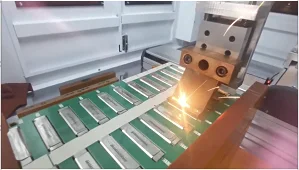
Nowadays the laser industry is expanding ever more widely and more and more people know about laser welding. Laser welding has advantages that traditional welding simply cannot match, but when using it
you still need to choose the welding method that fits your own situation.