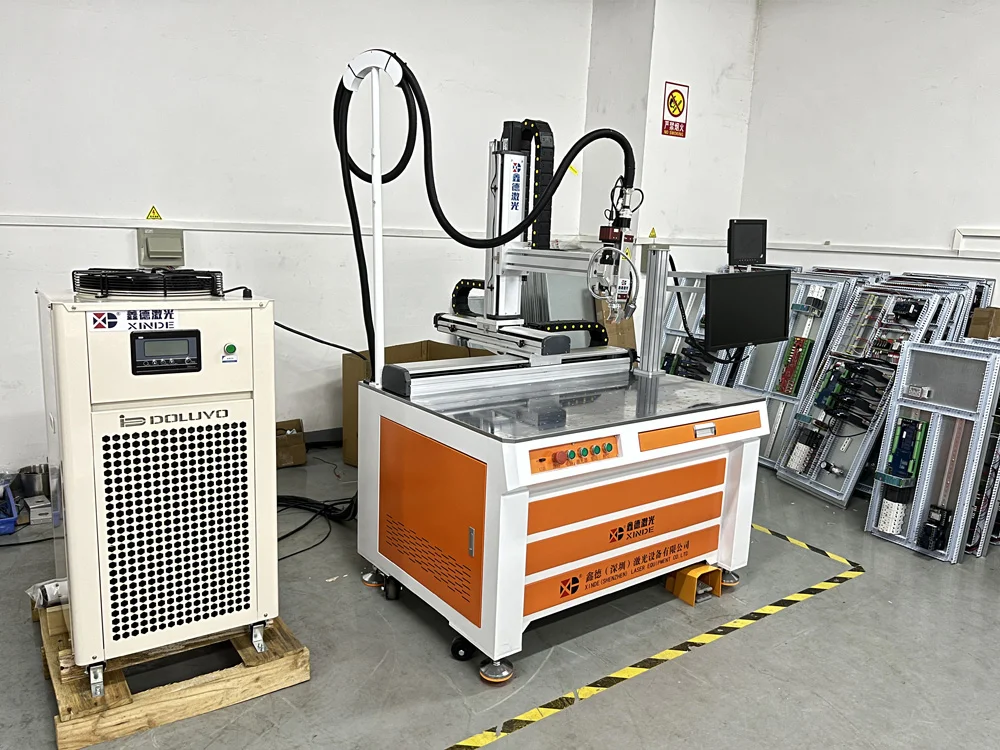

How to Control Laser Welder Quality?
How do you control the quality of a laser welder?
As laser technology keeps developing, laser welding has become increasingly mature, yet production with laser welders is still troubled by certain problems. So controlling
laser welder quality has become one of the key links in the process management of manufacturers.
First, have experienced staff judge by visual inspection whether the weld quality is acceptable — but that is only the first step, so do not jump to conclusions.
Then we can carry out destructive testing on the parts. What is destructive testing? It does not mean wrecking the machine; it means going beyond naked-eye inspection
and opening up the base material of the weld to make the judgment.
We can also control laser welder quality in various other ways, for example by monitoring tensile strength and using the test results to determine exactly where
the problem lies. If poor welding occurs during processing, it is not necessarily the welder at fault — the material may be unsuitable. After replacing
the material or changing the waveform settings of the laser welder, run the process again.
If the welded product keeps showing defects at the same location, check whether the worktable and fixture are at fault, and it is also worth
checking the energy stability of the welder.
So whenever a quality problem appears, first trace whether the fault lies with the material or with the welder. If it is the equipment,
we need to bring its quality back under control and get the machine on track as quickly as possible.