

How Thick Can a Laser Welding Machine Weld?
The weldable thickness of laser welding depends on the power of the laser welding equipment and the material being welded. Generally, a laser welding machine can achieve a welding depth of up to 7 mm, and the firmness can be achieved as needed.
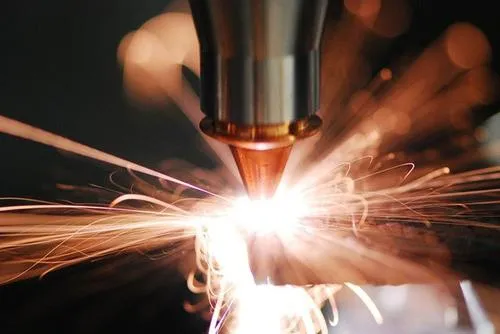
The industry applications of laser welding machines are as follows: Sanitary ware industry: water pipe joints, tees, valves, shower welding. Eyewear industry: stainless steel, titanium alloy, and other material clasps, precision welding of outer frames, etc. Hardware industry: impellers, kettles, handles, and other complex stamped or cast parts. Automotive industry: engine head gasket sealing welds, hydraulic tappet sealing welds,
spark plug welding, filter welding, etc. Medical industry: stainless steel seals, medical devices, medical instruments, structural part welding. Electronics industry: solid-state relay sealing welds,
connector welding, MP3 metal housings and structural parts. Motor housings and wire welding, fiber optic connectors, etc. Household hardware: kitchenware, stainless steel door handles,
electronic components, sensors, clocks, precision machinery, communications, crafts, and other industries, as well as high-strength products such as automotive hydraulic tappets.
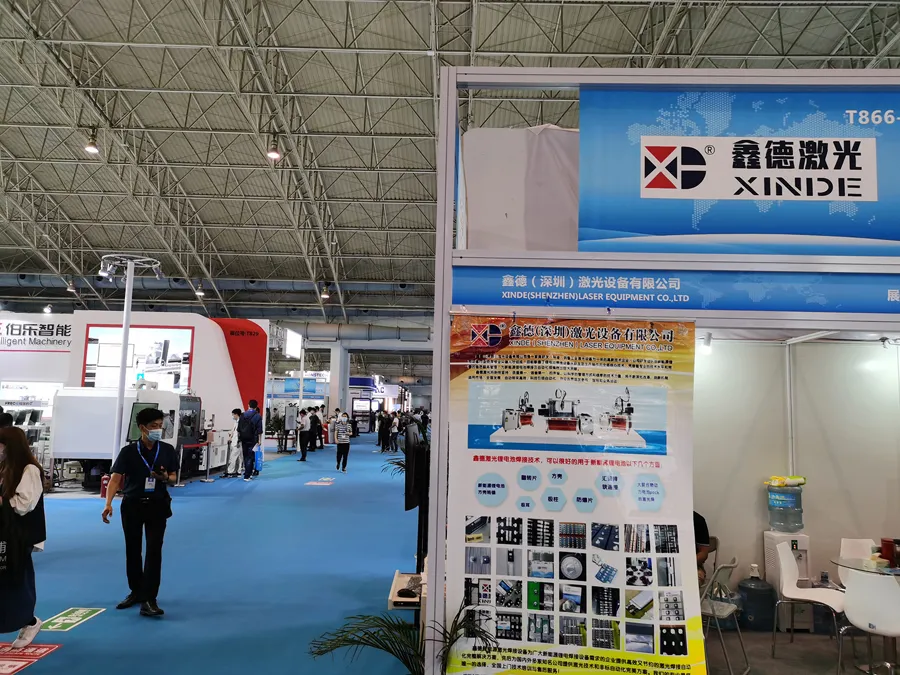
Almost all of these industries use laser welding machines. The advantages are energy concentration, pollution-free operation, small weld spots, a wide range of weldable materials, high applicability, high efficiency
and high-speed welding. At the same time, the following requirements also apply to laser welding. 1. Products with weld-seam requirements should use laser welding—not only is the weld small, but further welding is often unnecessary. 2. Highly automated products: in this case, laser welding equipment can be manually programmed with automatic paths. 3. Products welded at room temperature or under special conditions can
be welded at room temperature or under special conditions; laser welding equipment is easy to install. For example, if the laser passes through an electromagnetic field, the beam does not move; the laser can weld in air, in a vacuum,
and in certain gas environments, and can weld through glass or onto a transparent beam. 4. Some inaccessible parts require laser welding equipment; it can weld hard-to-reach
parts, enabling non-contact long-distance welding with high sensitivity. Especially in recent years, YAG laser processing technology using fiber-optic transmission has made laser welding more
popular and widely applied.
Laser welding uses high-energy laser pulses to locally heat materials within a small area. The laser radiation energy propagates into the material interior via heat, melting it to form a specific molten pool.
It is a new welding method, mainly used for welding thin-wall materials and precision parts, enabling spot, butt, lap, and seal welding, etc., with a small weld width, small heat-affected zone, small deformation,
fast welding speed, smooth welds, high weld quality, precise controllability, high positioning accuracy, and easy automation. Laser welding machines are often called laser welding energy negative-feedback machines, laser cold welding machines, laser argon welding machines, and laser welding equipment. With continuous technological development, traditional welding methods can no longer meet
the special requirements of many industrial technologies; the advantages of laser welding machines include low bond strength and a wide heat-affected zone, and they have gradually replaced traditional welding methods in many industries.
The three major defects of laser welding
Because laser technology features low heat input, small heat-affected zone, and low tendency to deform, it receives special attention in aluminum alloy welding. But on the other hand, due to
its inherent defects, laser welding processing has three major difficulties. So how to cleverly solve them?
Difficulty 1: Low laser absorption rate of the material
a) Adopt appropriate surface pretreatment processes, such as sanding, chemical etching, plating, etc., to increase the material's laser absorption rate.
b) Reduce the spot size and increase laser power density.
c) Change the welding structure so the laser beam forms multiple reflections in the gap, facilitating aluminum alloy welding.
Difficulty 2: Susceptibility to porosity and hot cracking
1) Through multiple welding tests and research, it was found that adjusting the laser power waveform during welding can reduce unstable pore collapse, and changing the laser beam incidence angle and
applying a magnetic field during welding can reduce porosity.
2) When using a YAG laser, the thermal input can be controlled by adjusting the pulse waveform to reduce solidification cracking.
Difficulty 3: Decline in mechanical properties of the welded joint during welding
Because the unstable porosity in aluminum alloy welding affects the mechanical properties of the joint. Aluminum alloy mainly contains three elements: Zn, Mg, and Al. During welding, the boiling point of aluminum is higher
than the other two elements. Therefore, during aluminum alloy welding, some low-boiling-point alloy elements can be added to facilitate pore formation and weld firmness.
The high efficiency of aluminum alloy laser welding processing makes its development prospects very promising. Therefore, researchers continue to develop new
technologies such as laser-arc hybrid processes and dual-focus technology to improve welding stability and weld quality.